
1BQ_
1BQ_
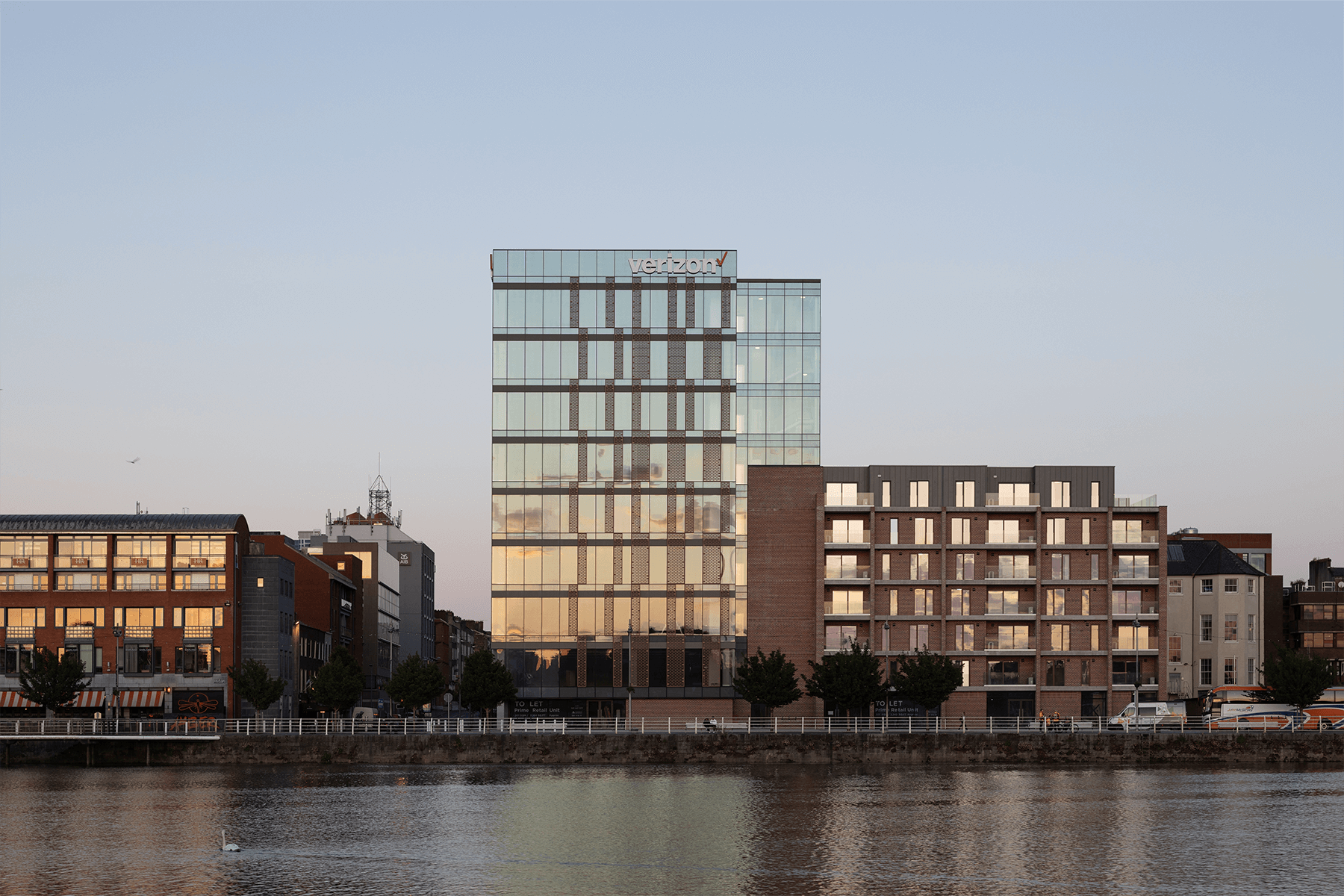
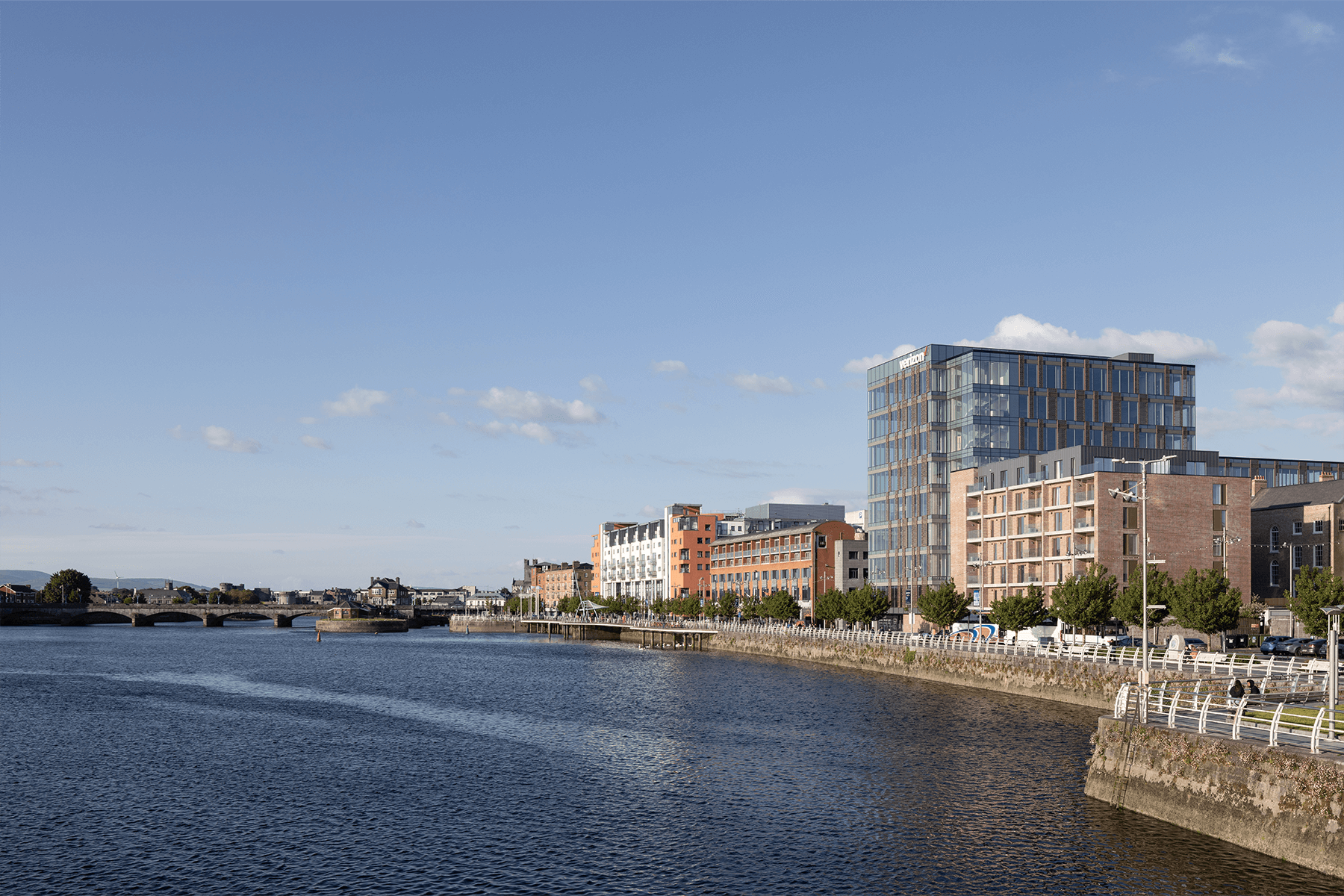
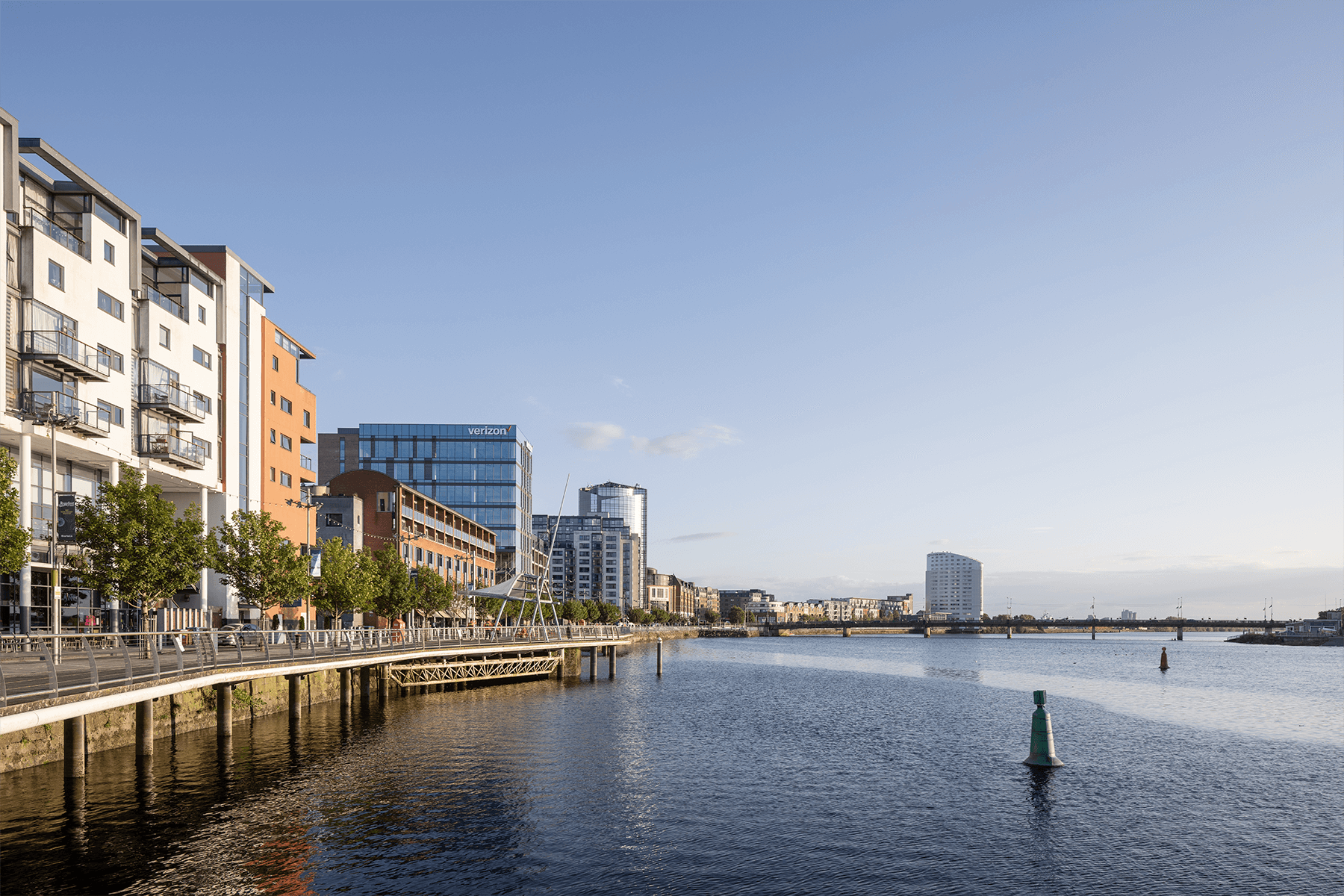
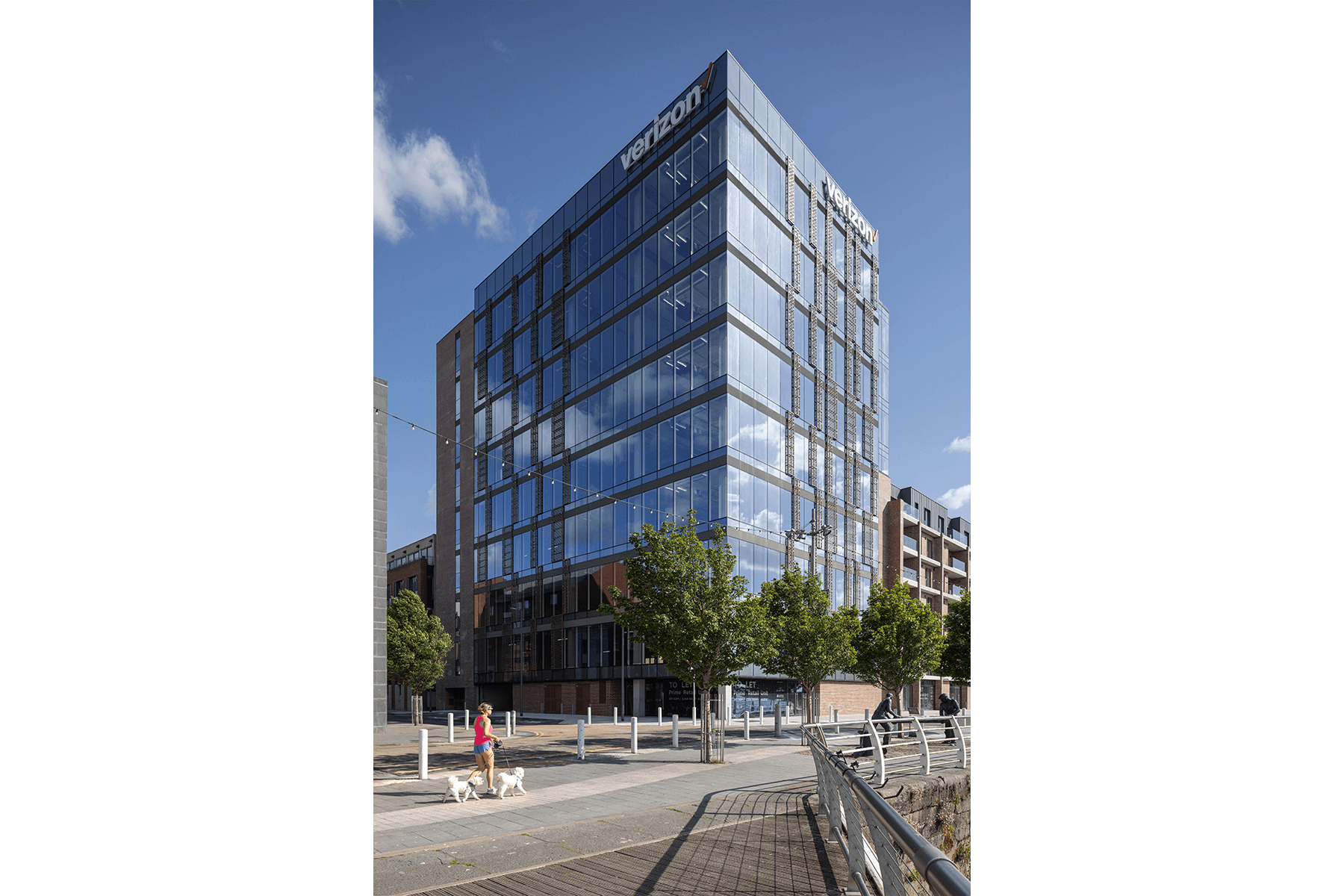
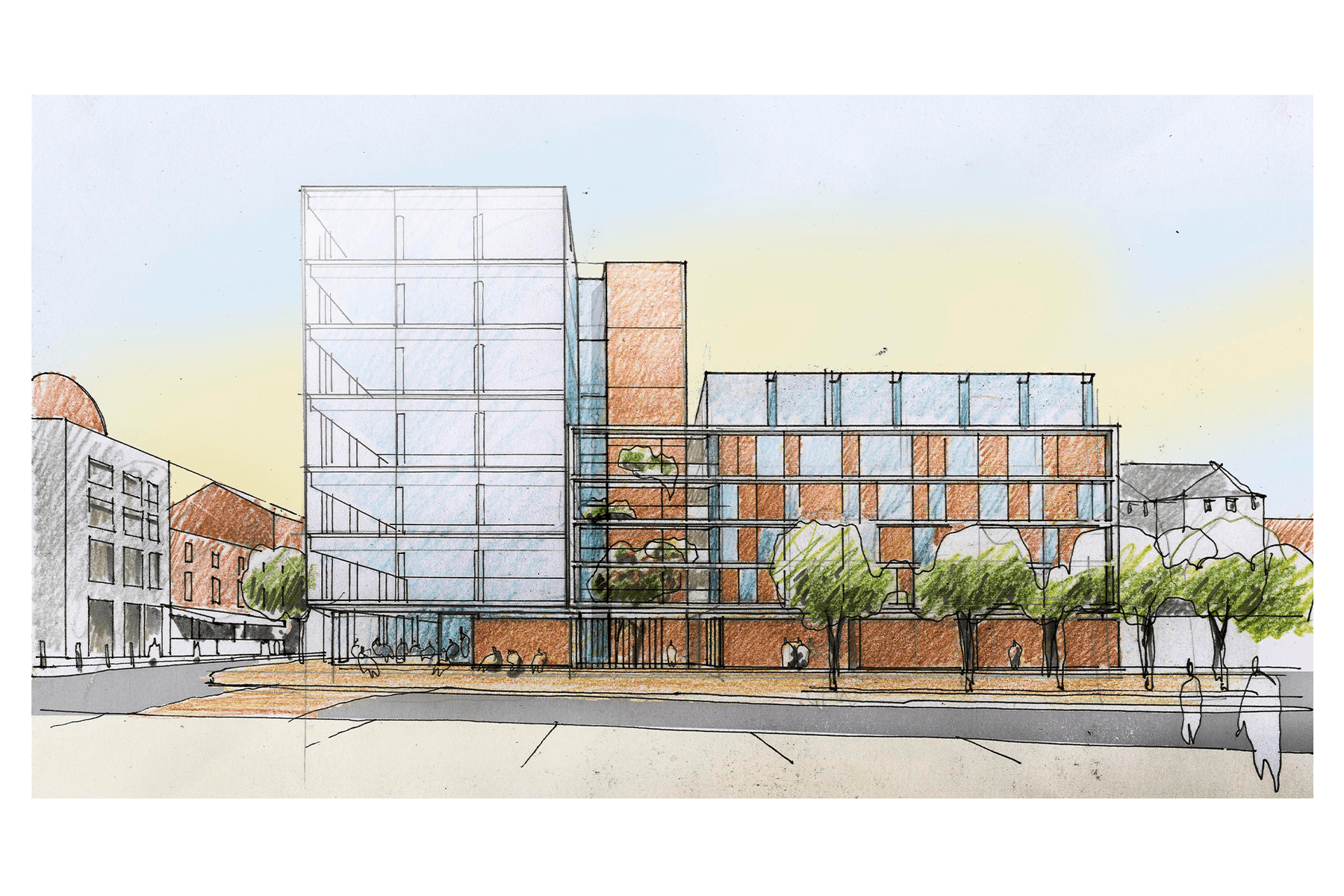
Located on the banks of the River Shannon on an urban corner and infill site in Limericks city centre, 1BQ rises 9 stories tall offering panoramic views of the city and down the River Shannon.
The riverfront portion of the site was originally an ESB District Headquarters, and subsequently a Regional Headquarters until the year 2000. The two-storey flat roofed brown brick building consisting of two blocks comprising a shop and offices on a Tshaped plan was built in 1984.
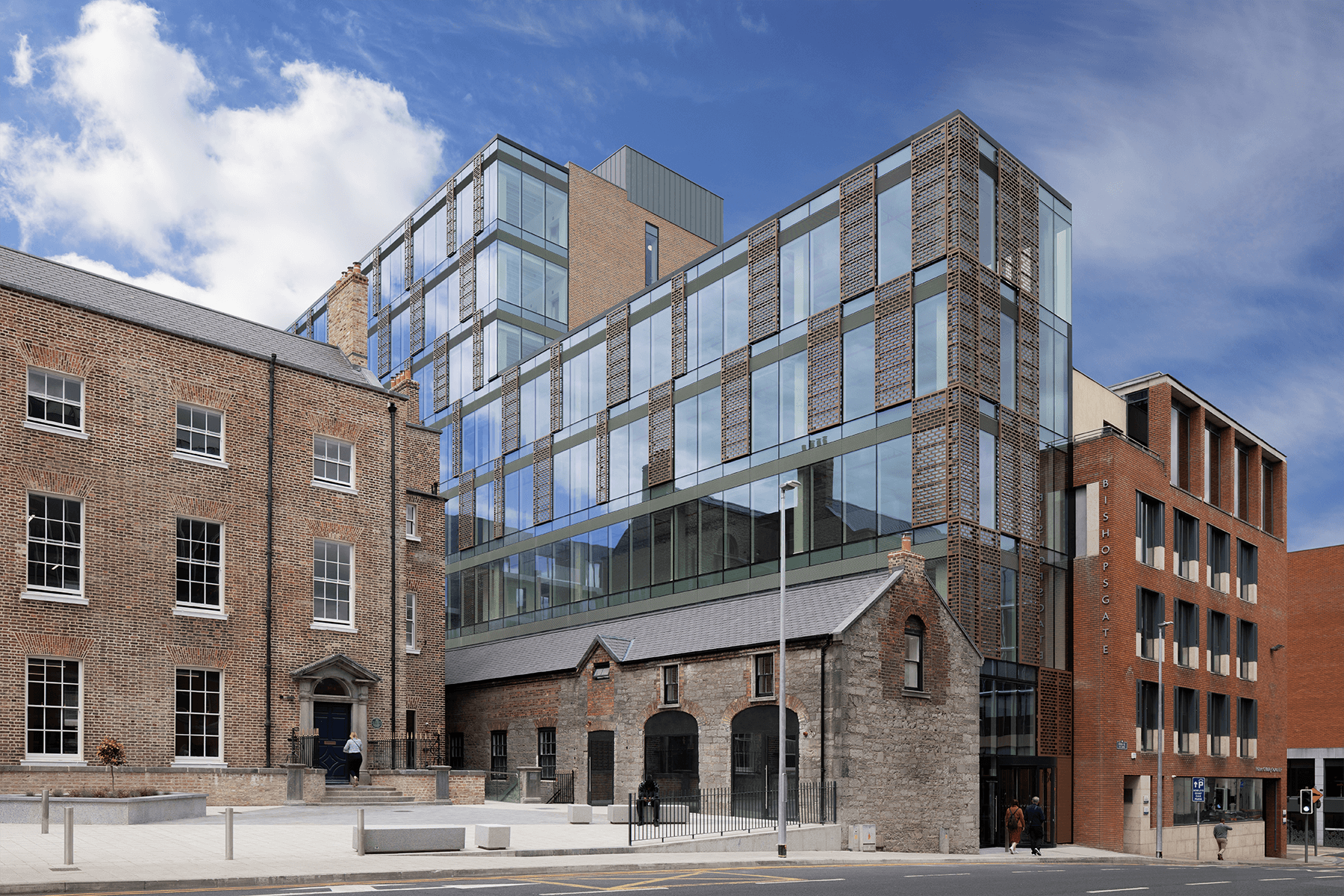
The city centre portion of the site comprised of two main elements – (a) an undeveloped narrow infill site between a stone coach house and five storey office building, (b) 3 stories over basement Georgian building known as The Bishops Palace with associated adjacent stone coach house.
The development comprises 4 key elements – (1) The Glass Tower, (2) The City Infill, (3) The Apartment Building and (4) The Bishops Palace.
THE GLASS TOWER
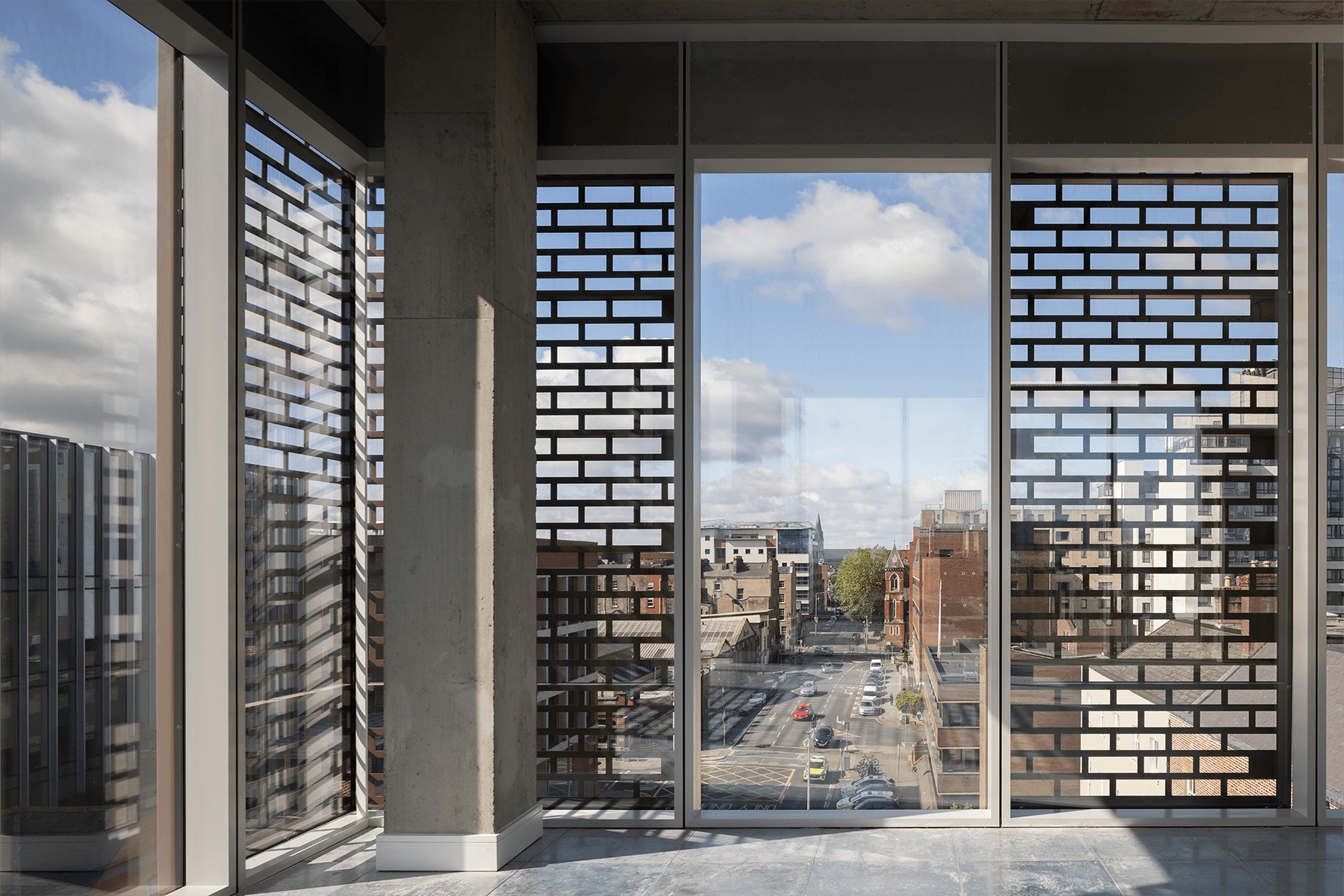
The 9 storey tower provides 82,000sqft of flexible open plan office space with views of the city and across the River Shannon.
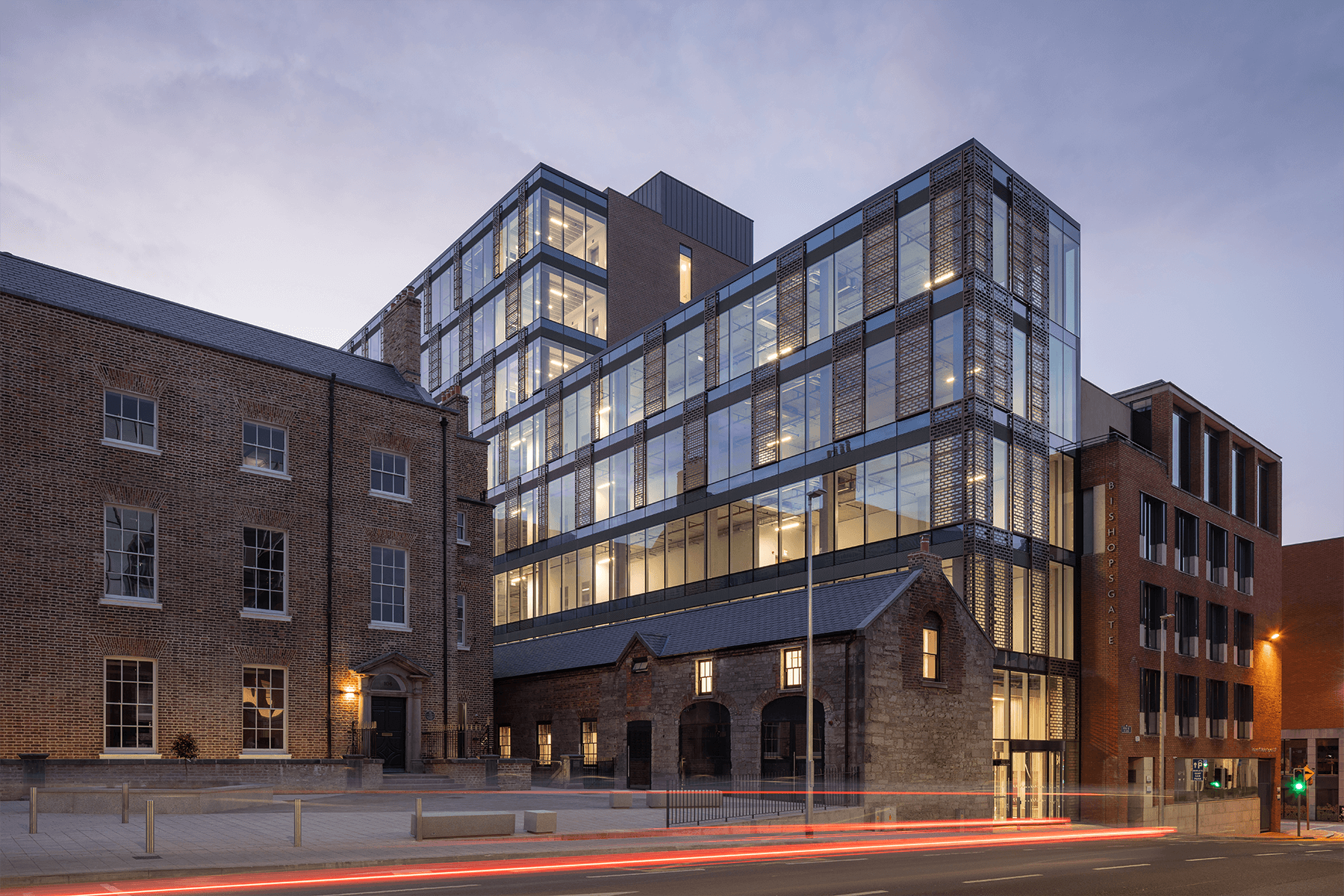
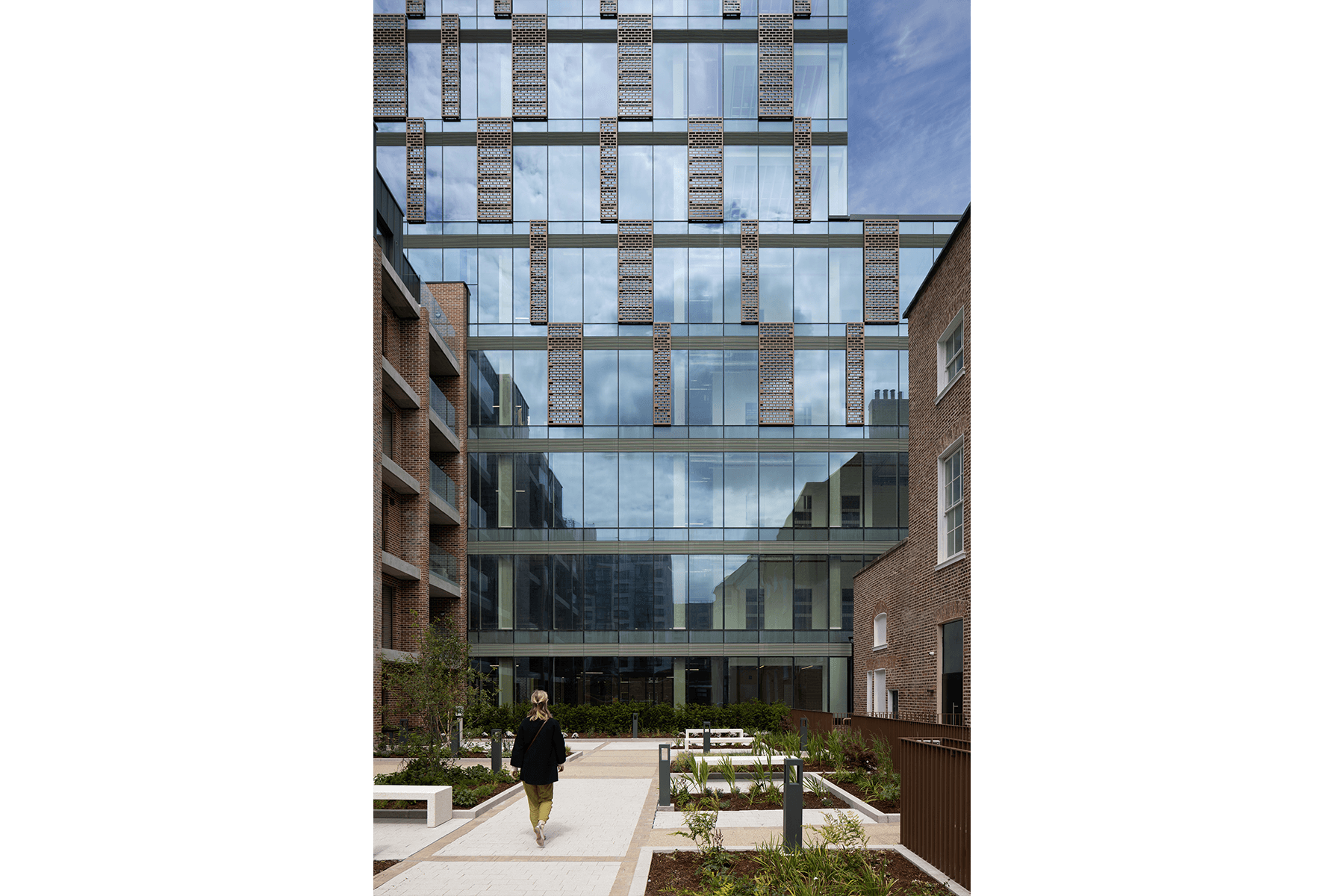
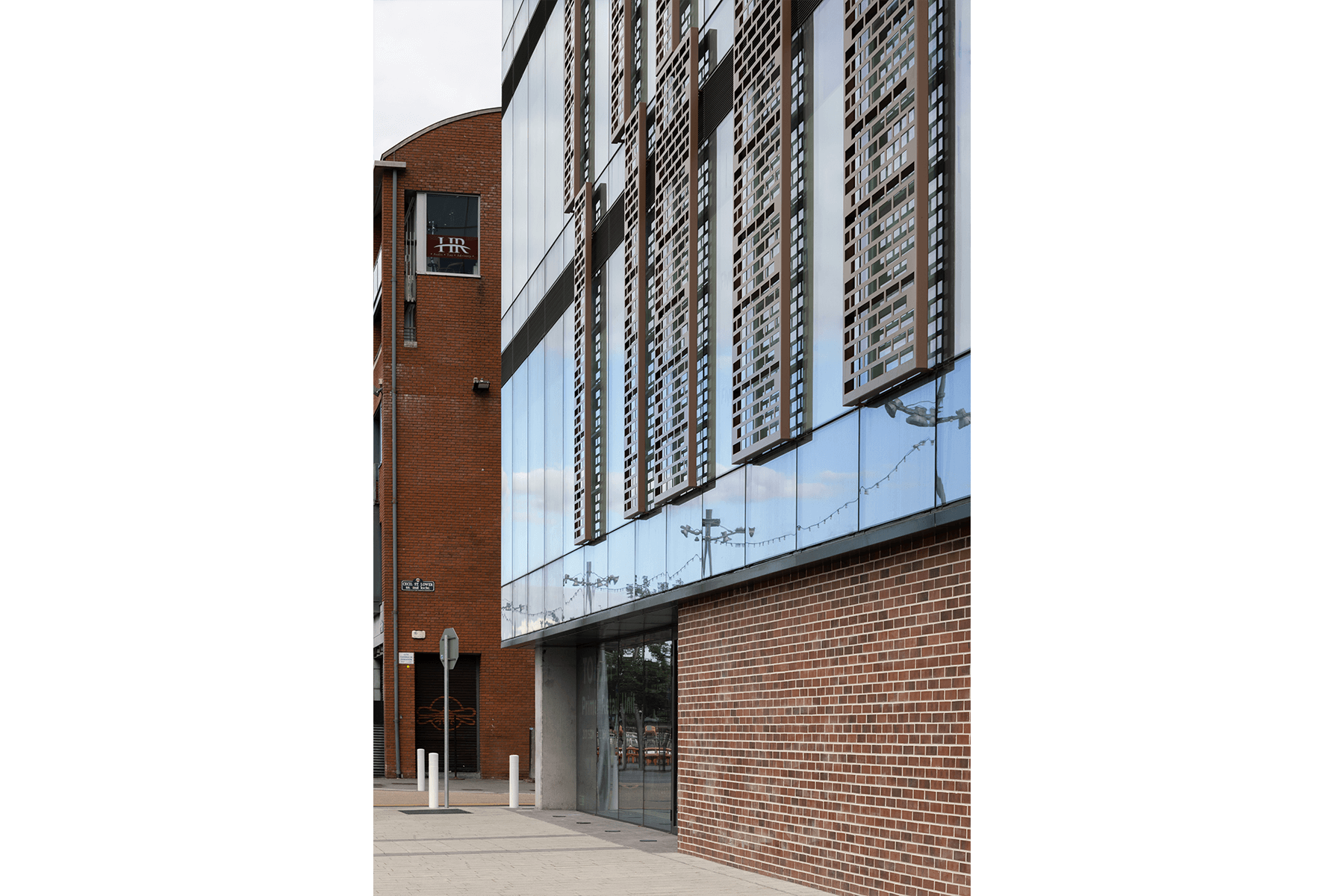
A predominately glass façade is interspersed with a rhythmic pattern of metal solar shading panels across all elevations. The perforated panels echo the brick architecture of the surrounding buildings in both form and colour.
The open office floor spaces dominate the glass tower offering high levels of natural light, expansive views and adaptability of floor space.
THE CITY INFILL
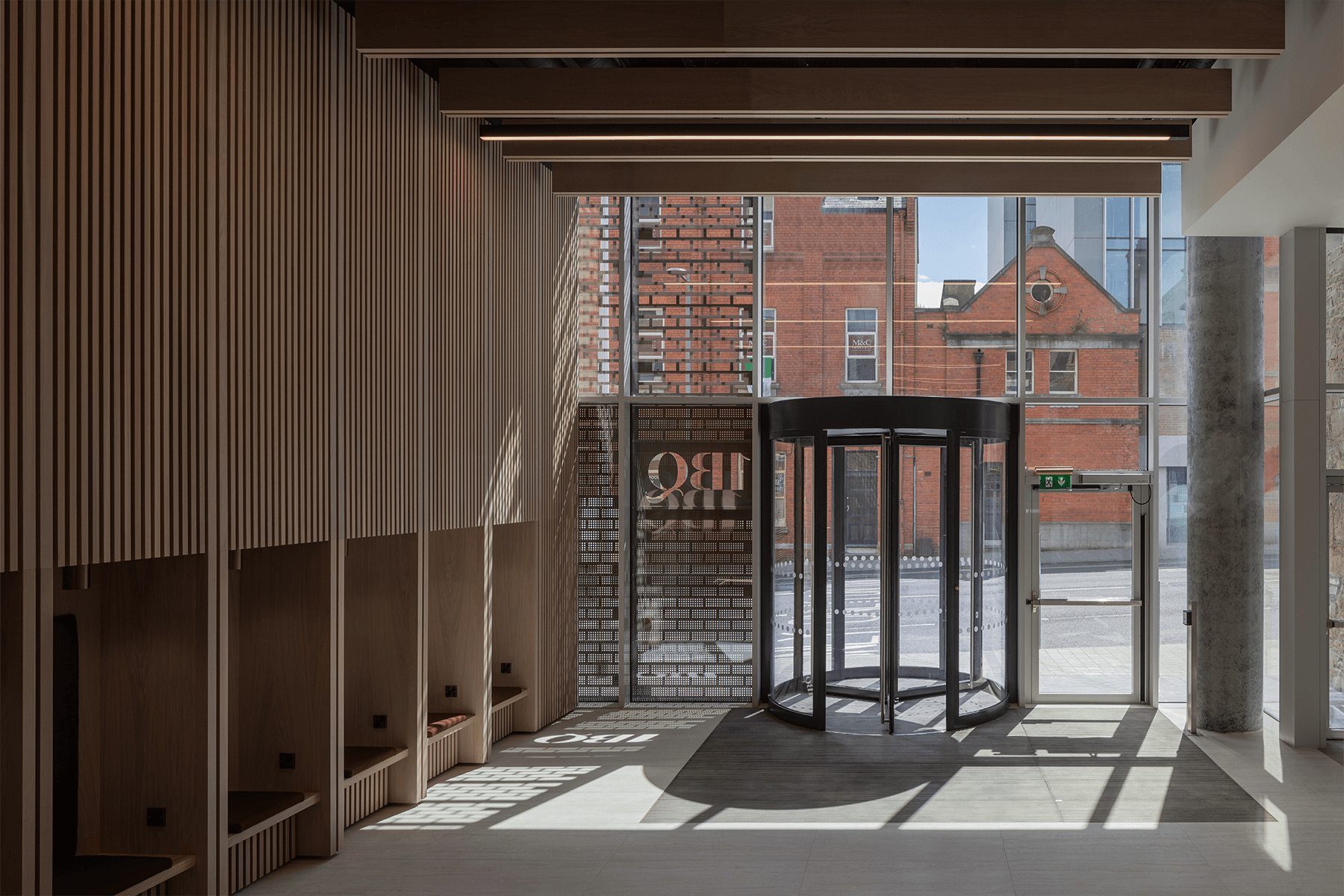
The narrow 9m infill site provides the office buildings main entrance lobby. A 4 storey building is slotted in to the architecture of Henry St. set back from the adjacent buildings and expressed in a glass and metal contemporary façade. A revolving door brings visitors inside from the city realm of Henry St.
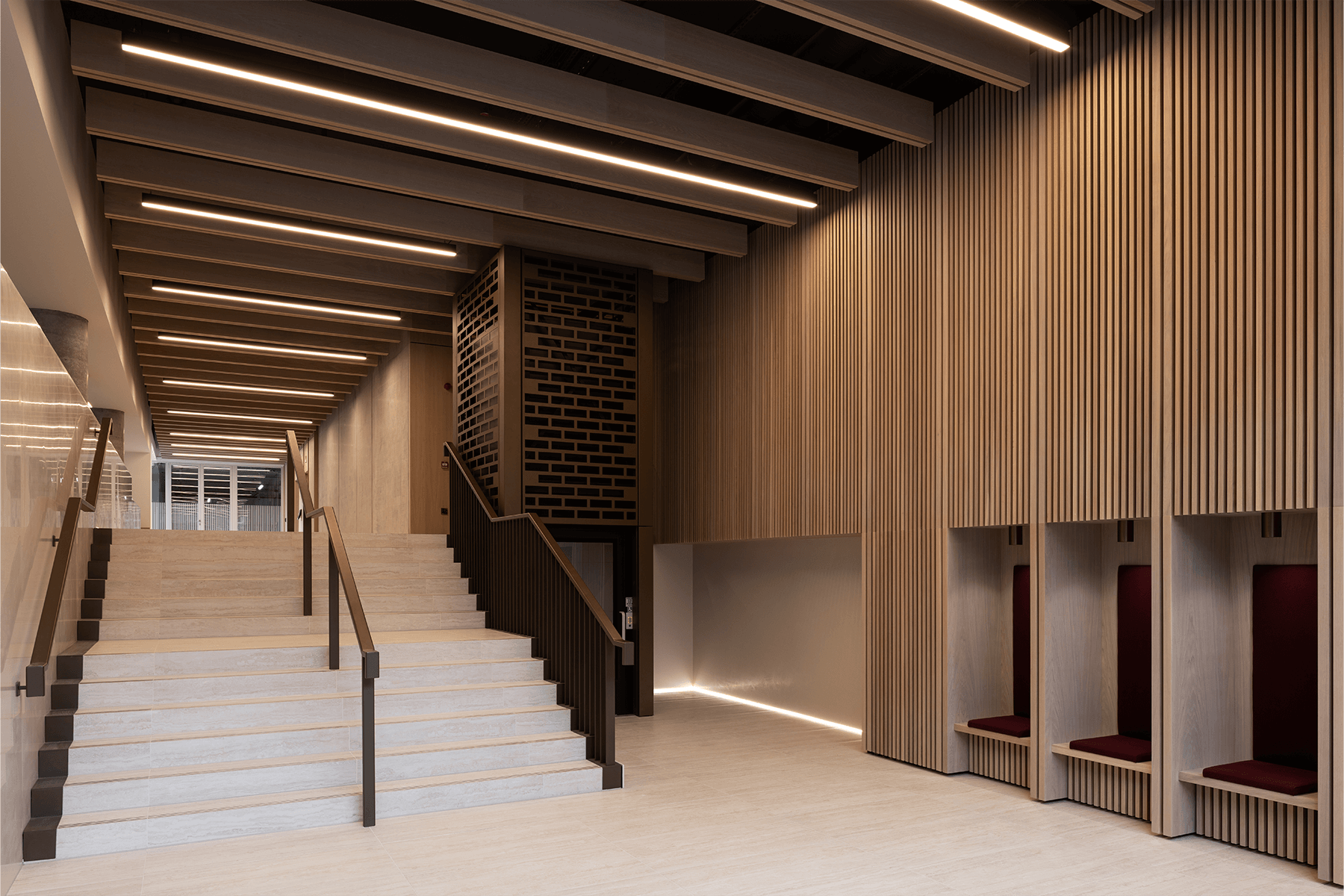
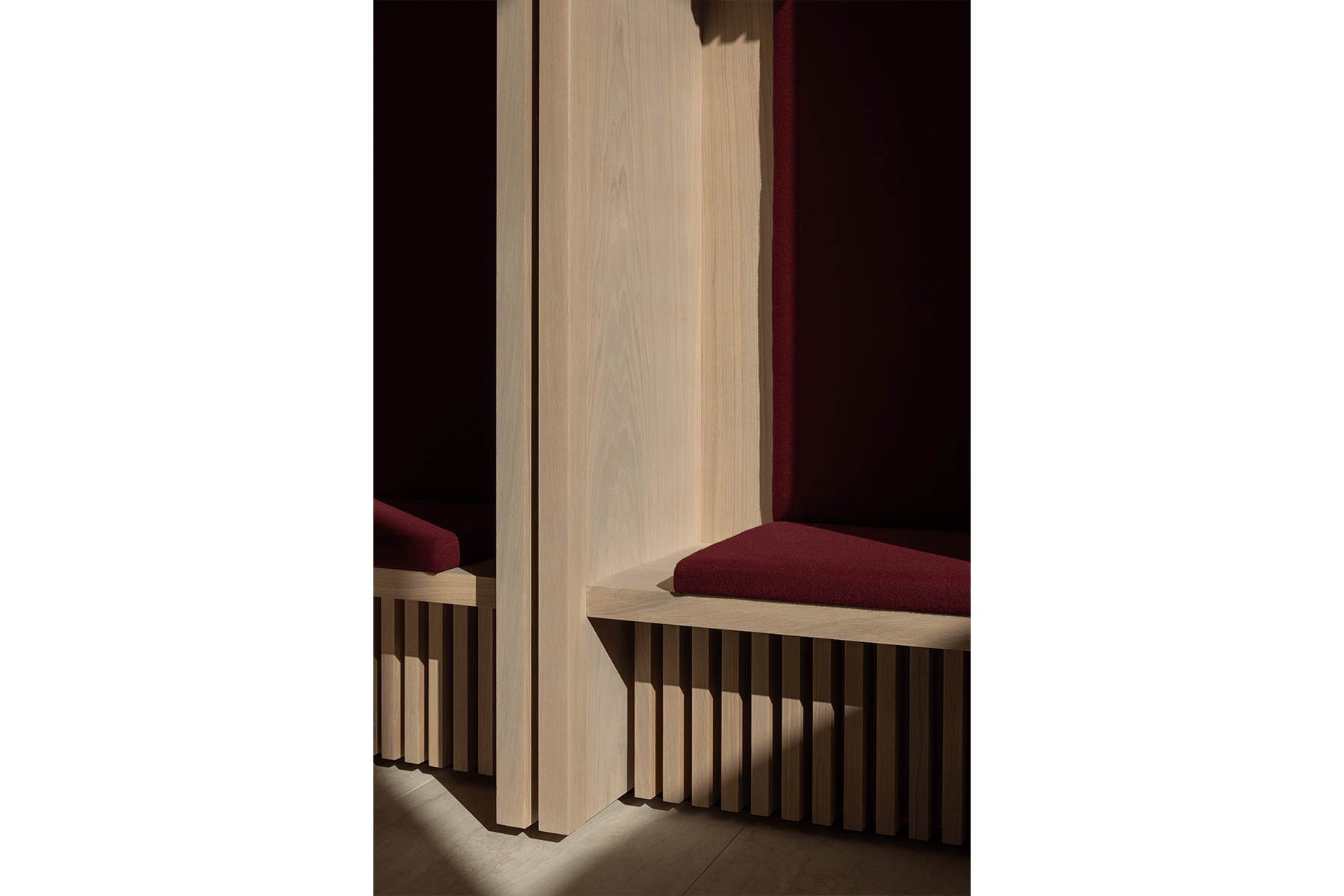
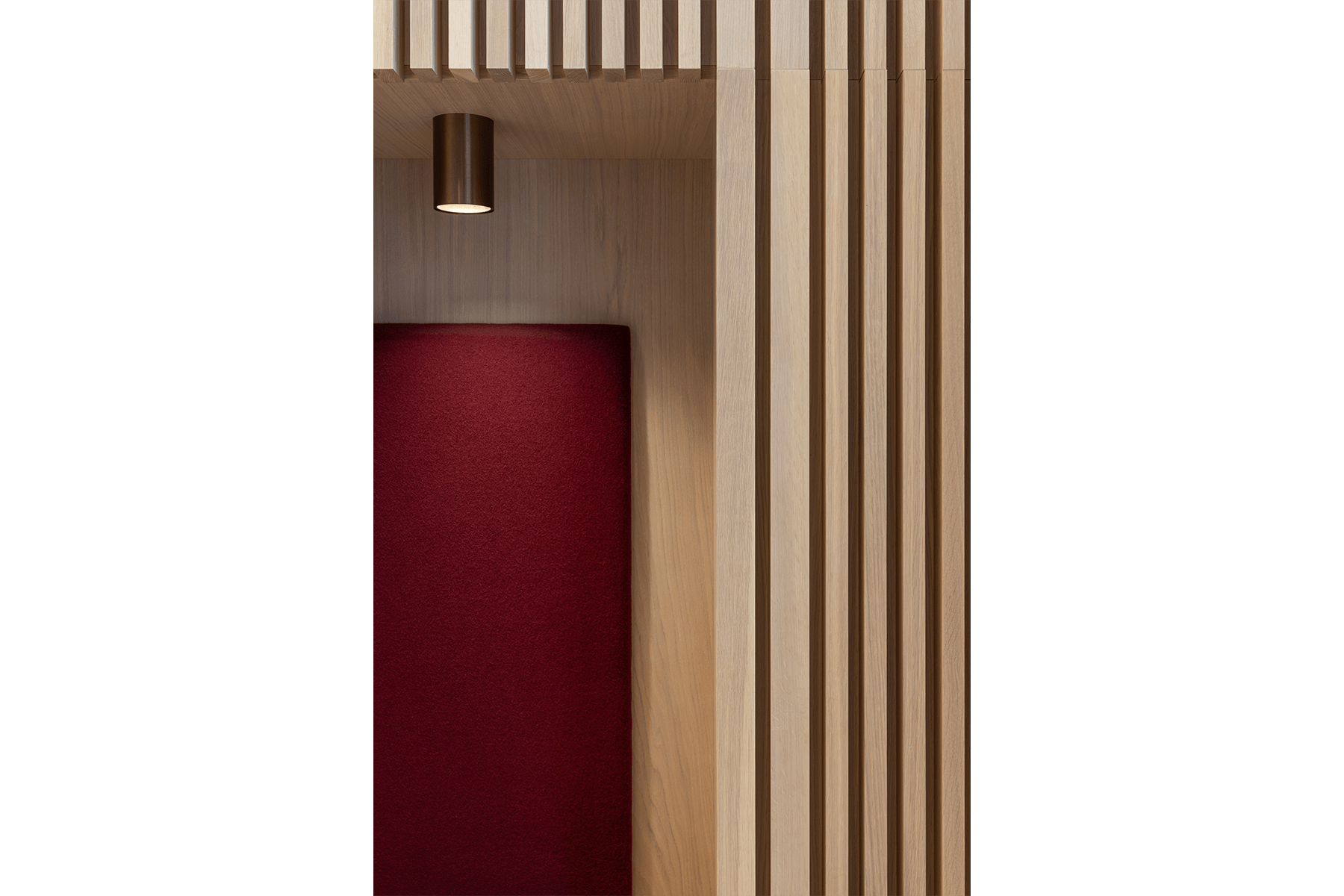
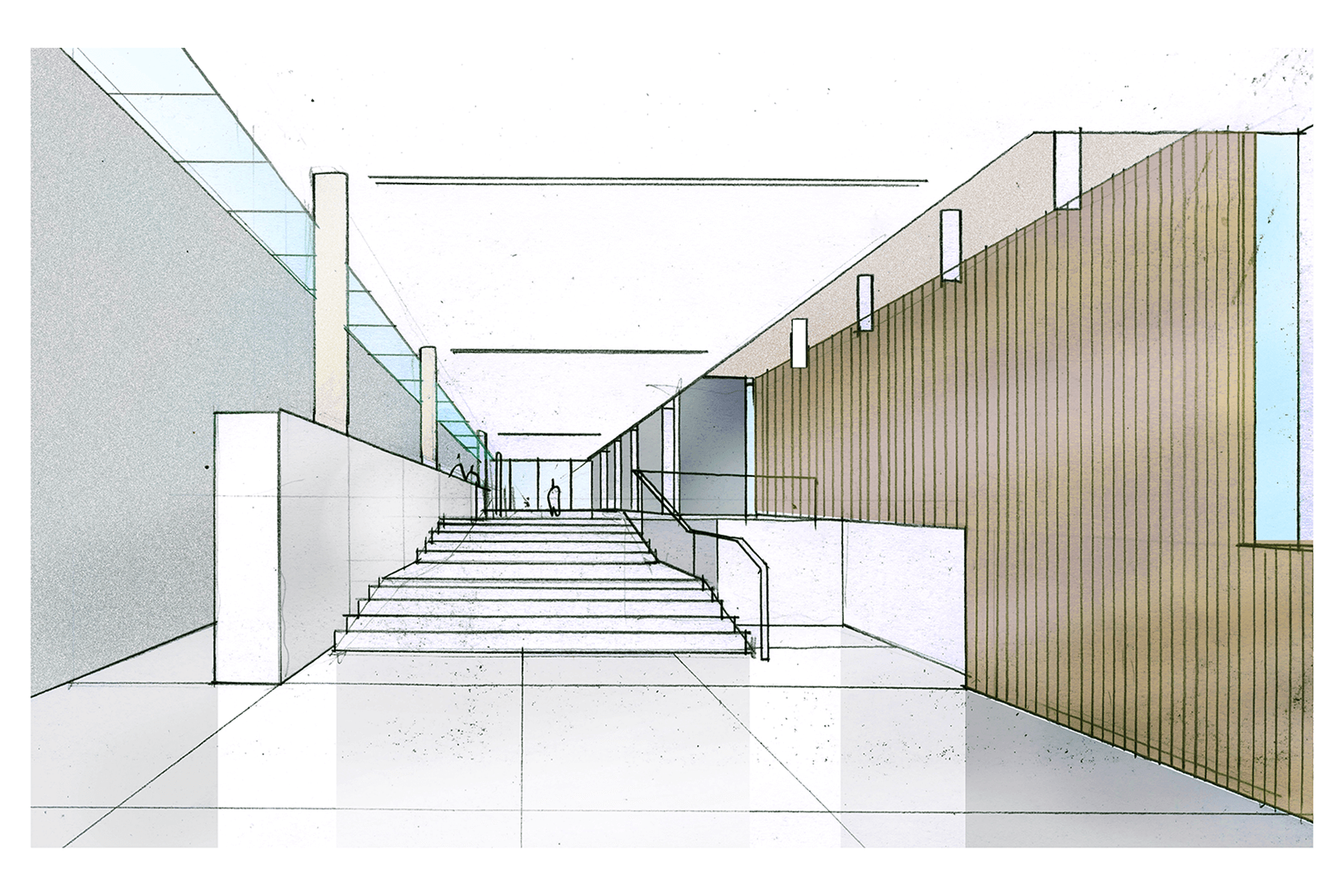
A double-height space of elegant proportion is expressed with timber, natural stone and exposed concrete surfaces. Recessed timber seats are formed below the vertical clad timber panelling wall omitting the need for additional loose furniture offerings in the lobby space. A series of linear timber baffles hang below the service zone at ceiling level guiding the eye to the upper level lobby space and extending the simple material palette to all surfaces within the space.
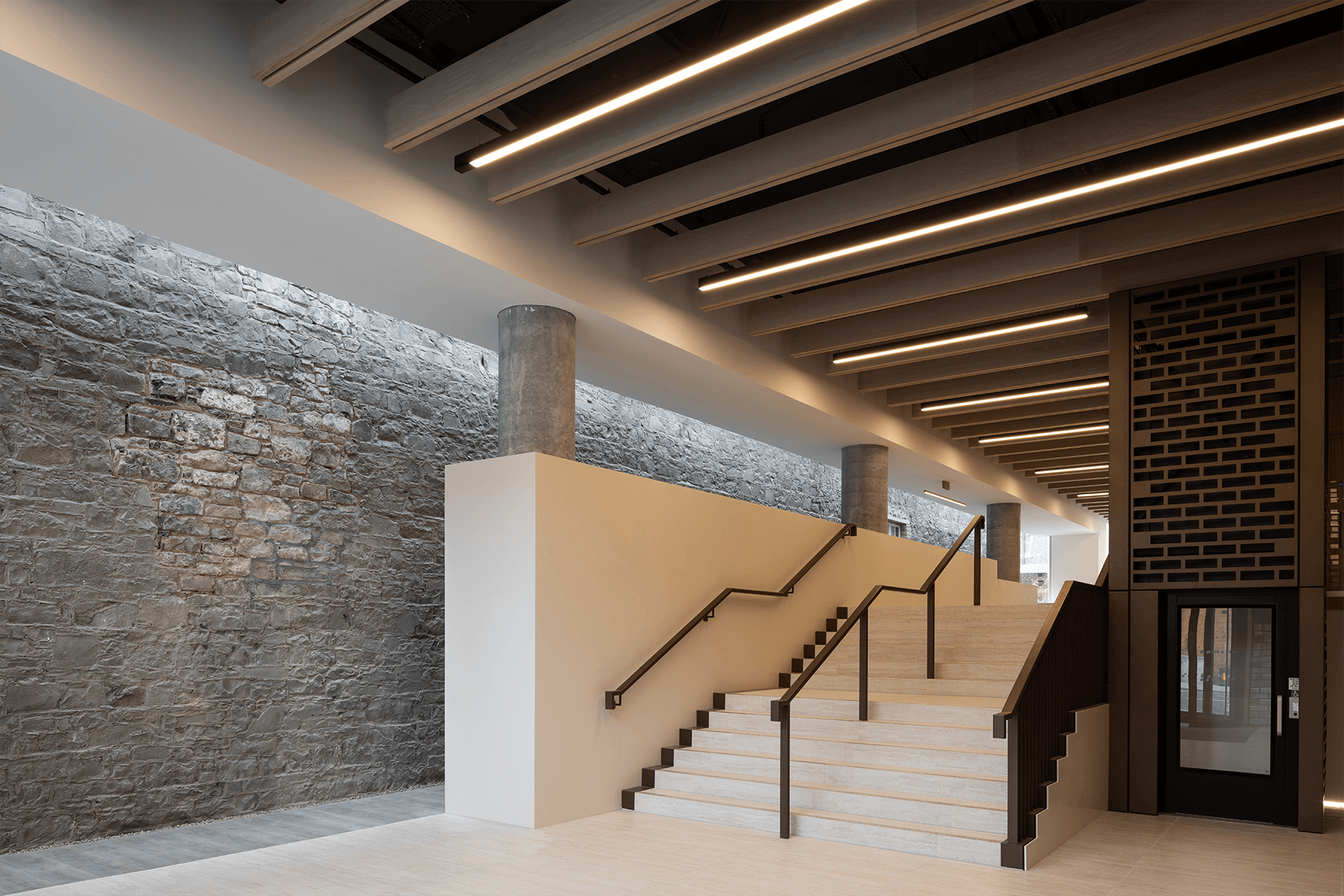
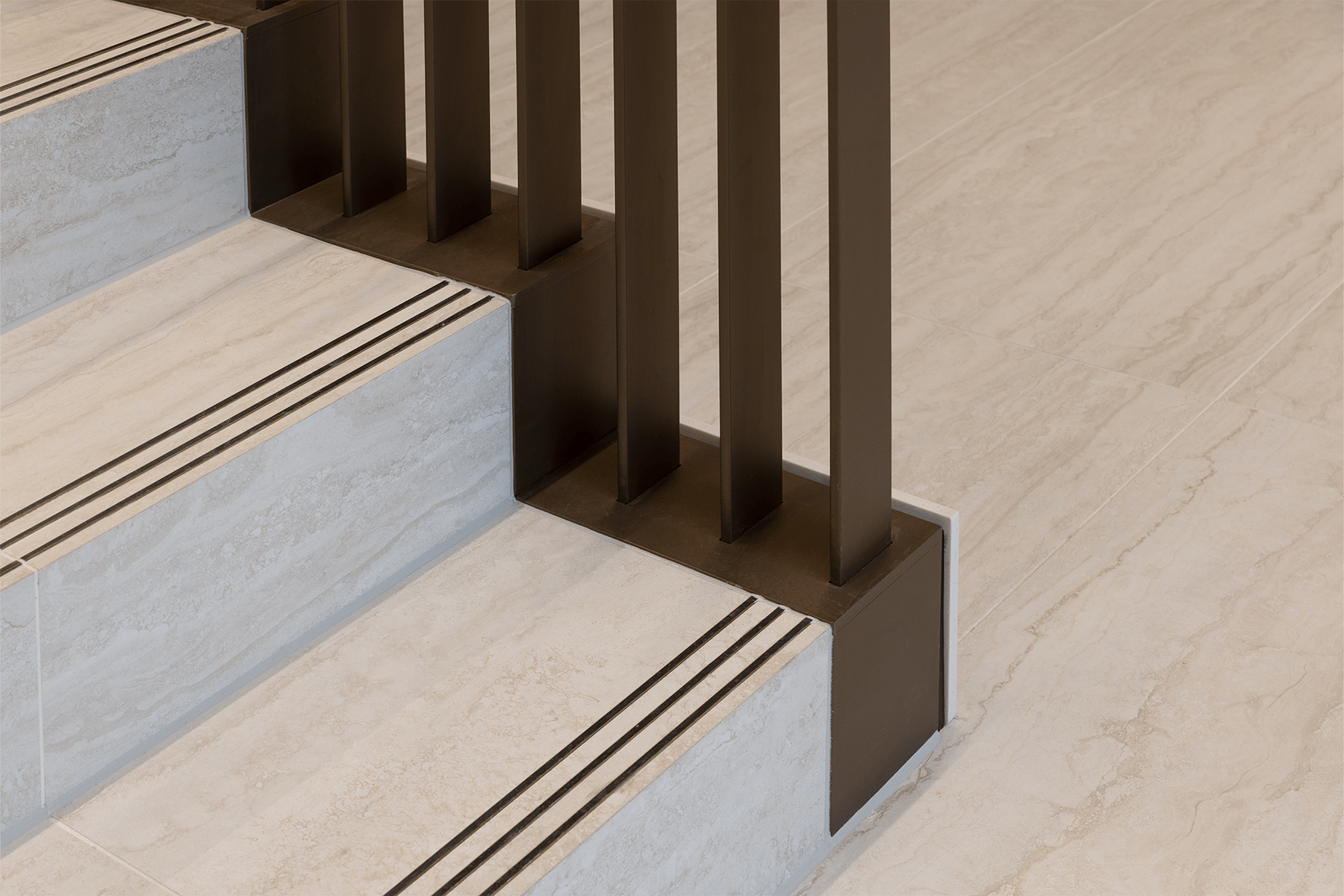
Light cream travertine tiles with bronze detailing enhance the simple internal expression of the lobby. A dark bronze handrail extends from the lower lobby to upper lobby level. The perforated metal panels of the façade clad the platform lift – a subtle internal expression of the architectural exterior.
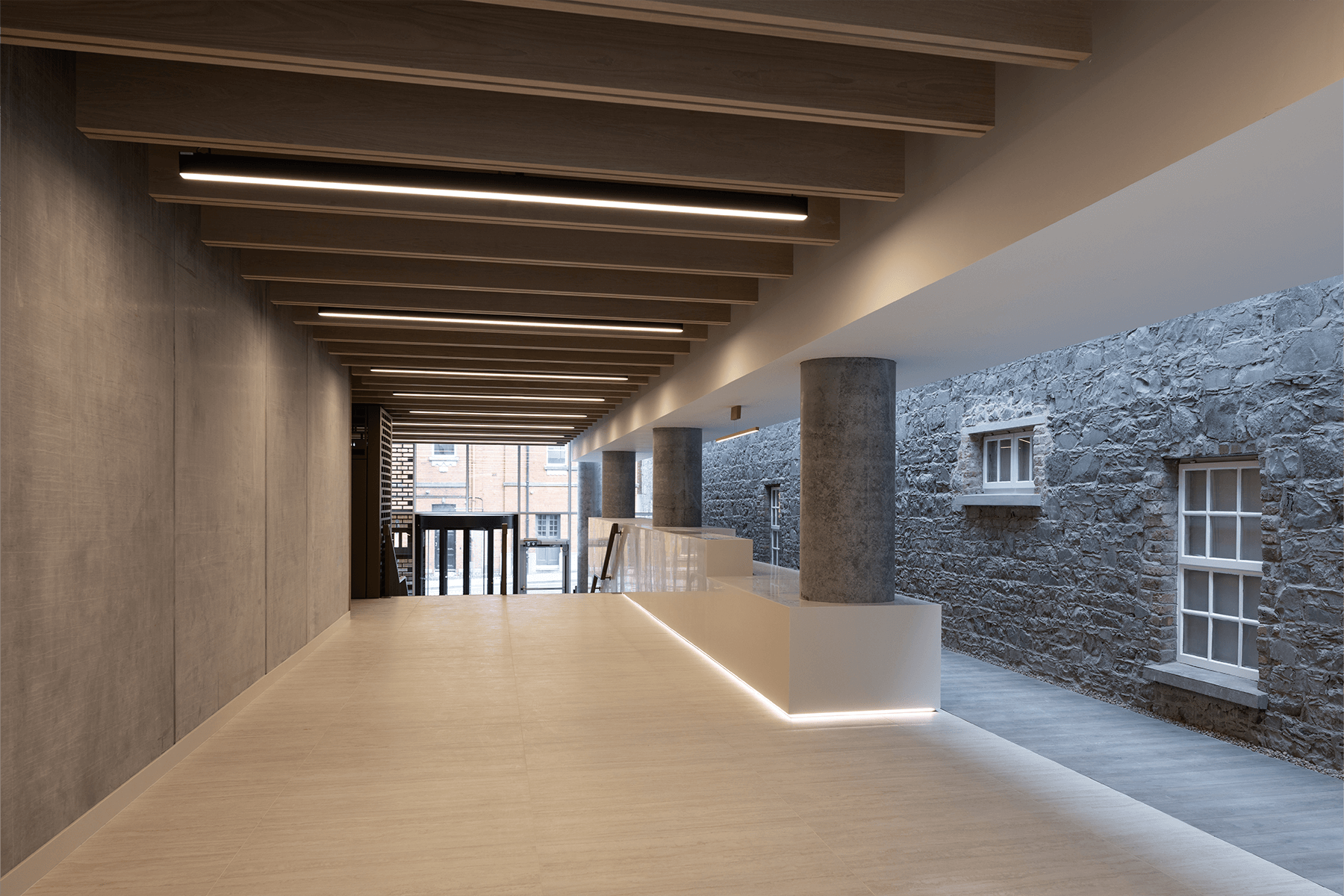
Smooth stone-like circular concrete columns, supporting the building above, are offset from the old stone wall of the internal façade. A long linear rooflight provides a strip of daylight along the length of the foyer space.
With its simple materiality, baffled ceiling and strong vertical proportions the space is designed as a calm transition from city to office.
THE APARTMENT BUILDING
The Residence at 1BQ comprises 34 luxury apartment suites located above street level in a 7 storey brick residential building. Apartments offer views to the inner contemporary landscaped courtyard flanked by the Georgian façade of the Bishops Palace and views across the River Shannon.
With its rich red brick facades, detailed with soldier coursing at floor levels and windows, the architectural composition of the elevations responds to the materiality of the Georgian streetscape context. The use of vertical brick piers extending from street to roof level echos the traditional narrow grid of the Georgian buildings in Limerick city centre. Deep balonies with glass balustrades are recessed in the facades providing a sheltered external space for the apartments.
A south facing landscaped courtyard with rich planting and seating areas offers an oasis of calm in the middle of Limerick City.
THE BISHOPS PALACE
The Bishop’s Palace is a very significant architectural historical survival, which has retained its outbuilding wing, though it has lost its garden and other lesser outbuildings. The forecourt and neighbouring building also survive. Documentary and cartographic sources suggest that the house was built a few years before 1784 in conjunction with the neighbouring house. It is a prominent example of late-eighteenth-century urban provincial Irish domestic architecture.
The project involved the sympathetic restoration of the main Georgian building to modern offices while retaining Georgian features and historic character.
The stone Coach House building has been restored with the reintroduction of the original arched openings in a contemporary approach.
With its already well defined city scale and structure, Henry St. has benefited from a new south-facing public plaza flanked by the refurbished Bishops Palace and The Coach House building.
In excess of 100 underground car park spaces and over 50 cycle park spaces are provided beneath the office and apartment buildings.
As one of the largest buildings in the city and Limerick’s newest LEED development, the office building is deigned to incorporate "LEED Gold Standard", and constructed to achieve the principles of Near Zero Emissions Buildings (NZEB).
1BQ_
Located on the banks of the River Shannon on an urban corner and infill site in Limericks city centre, 1BQ rises 9 stories tall offering panoramic views of the city and down the River Shannon.
The riverfront portion of the site was originally an ESB District Headquarters, and subsequently a Regional Headquarters until the year 2000. The two-storey flat roofed brown brick building consisting of two blocks comprising a shop and offices on a Tshaped plan was built in 1984.
The city centre portion of the site comprised of two main elements – (a) an undeveloped narrow infill site between a stone coach house and five storey office building, (b) 3 stories over basement Georgian building known as The Bishops Palace with associated adjacent stone coach house.
The development comprises 4 key elements – (1) The Glass Tower, (2) The City Infill, (3) The Apartment Building and (4) The Bishops Palace.
THE GLASS TOWER
The 9 storey tower provides 82,000sqft of flexible open plan office space with views of the city and across the River Shannon.
A predominately glass façade is interspersed with a rhythmic pattern of metal solar shading panels across all elevations. The perforated panels echo the brick architecture of the surrounding buildings in both form and colour.
The open office floor spaces dominate the glass tower offering high levels of natural light, expansive views and adaptability of floor space.
THE CITY INFILL
The narrow 9m infill site provides the office buildings main entrance lobby. A 4 storey building is slotted in to the architecture of Henry St. set back from the adjacent buildings and expressed in a glass and metal contemporary façade. A revolving door brings visitors inside from the city realm of Henry St.
A double-height space of elegant proportion is expressed with timber, natural stone and exposed concrete surfaces. Recessed timber seats are formed below the vertical clad timber panelling wall omitting the need for additional loose furniture offerings in the lobby space. A series of linear timber baffles hang below the service zone at ceiling level guiding the eye to the upper level lobby space and extending the simple material palette to all surfaces within the space.
Light cream travertine tiles with bronze detailing enhance the simple internal expression of the lobby. A dark bronze handrail extends from the lower lobby to upper lobby level. The perforated metal panels of the façade clad the platform lift – a subtle internal expression of the architectural exterior.
Smooth stone-like circular concrete columns, supporting the building above, are offset from the old stone wall of the internal façade. A long linear rooflight provides a strip of daylight along the length of the foyer space.
With its simple materiality, baffled ceiling and strong vertical proportions the space is designed as a calm transition from city to office.
THE APARTMENT BUILDING
The Residence at 1BQ comprises 34 luxury apartment suites located above street level in a 7 storey brick residential building. Apartments offer views to the inner contemporary landscaped courtyard flanked by the Georgian façade of the Bishops Palace and views across the River Shannon.
With its rich red brick facades, detailed with soldier coursing at floor levels and windows, the architectural composition of the elevations responds to the materiality of the Georgian streetscape context. The use of vertical brick piers extending from street to roof level echos the traditional narrow grid of the Georgian buildings in Limerick city centre. Deep balonies with glass balustrades are recessed in the facades providing a sheltered external space for the apartments.
A south facing landscaped courtyard with rich planting and seating areas offers an oasis of calm in the middle of Limerick City.
THE BISHOPS PALACE
The Bishop’s Palace is a very significant architectural historical survival, which has retained its outbuilding wing, though it has lost its garden and other lesser outbuildings. The forecourt and neighbouring building also survive. Documentary and cartographic sources suggest that the house was built a few years before 1784 in conjunction with the neighbouring house. It is a prominent example of late-eighteenth-century urban provincial Irish domestic architecture.
The project involved the sympathetic restoration of the main Georgian building to modern offices while retaining Georgian features and historic character.
The stone Coach House building has been restored with the reintroduction of the original arched openings in a contemporary approach.
With its already well defined city scale and structure, Henry St. has benefited from a new south-facing public plaza flanked by the refurbished Bishops Palace and The Coach House building.
In excess of 100 underground car park spaces and over 50 cycle park spaces are provided beneath the office and apartment buildings.
As one of the largest buildings in the city and Limerick’s newest LEED development, the office building is deigned to incorporate "LEED Gold Standard", and constructed to achieve the principles of Near Zero Emissions Buildings (NZEB).